

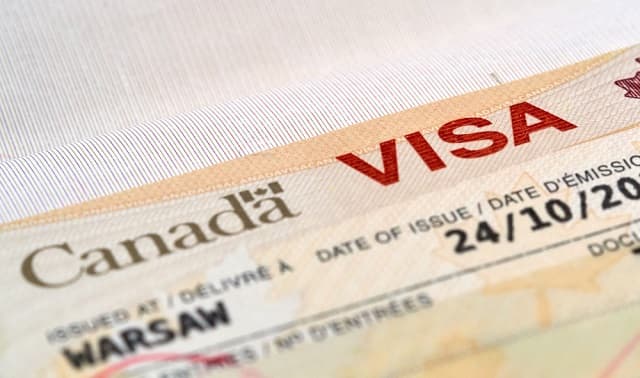
Canadian Visitor Visas (TRV)
Malkus Immigration can help you secure a new TRV - or extend or restore an existing visa - by managing the application process and demonstrating you plan to leave Canada when your TRV or eTA expires.
Individuals who want to enter Canada for a temporary purpose, such as tourists, visiting family members, temporary foreign workers and international students, must apply for a Temporary Resident Visa (TRV), unless they are citizens of a visa-exempt country, .
Citizens of visa-exempt countries who plan to travel to Canada by air are expected to have applied for and obtained an "electronic Travel Authorization" (eTA) before their departure to Canada. Exceptions to this include citizens of the United States, who do not require a TRV or an electronic Travel Authorization (eTA), and Green Card holders in the United States, who need an eTA to come to Canada, regardless of their nationality. Unless otherwise exempt from the requirement to obtain a TRV or an eTA, individuals who require a TRV do not require an eTA, and vice versa.
The TRV is a document issued by a Canadian Immigration Visa Office outside Canada, showing that the holder has met the requirements for entering to Canada as a visitor. TRVs may be for single entry or multiple entry. As a general guideline, tourists are admitted for a period of six months. Temporary foreign workers and international students are admitted for varying periods of time, as determined on a case-by-case basis. Extensions may be applied for from within Canada.
Having a valid TRV does not necessarily mean that the Officer at the Canadian Port of Entry will admit the visitor into Canada. At the Port of Entry, all visitors must demonstrate that they plan to leave Canada when their visa or eTA expires. Officers at the Port of Entry will deny admission to all persons who, in their opinion, do not intend to leave Canada at the expiry of their visitor status.
Many applications for TRVs are rejected because the applicants fail to convince immigration officials that they will leave Canada when their visa expires. This is especially true of applications by spouses who have also applied for Permanent Resident status through sponsorship.