

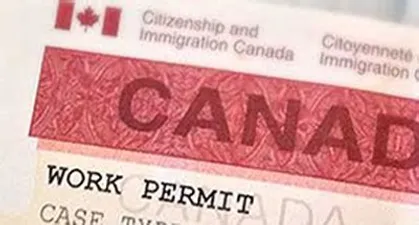
WORKING IN CANADA
Canada's economy needs foreign labour and Canadian society and businesses welcome foreign workers, both skilled and semi-skilled. Working in Canada on a temporary basis can be a first step towards permanent residence and citizenship because Canadian work experience can be used to advance a permanent residence application.
You may apply for a Work Permit either inside or outside Canada, based on your specific circumstances. If you are outside Canada, you will receive a Temporary Resident Visa (TRV) with a letter saying you are allowed to work in Canada. You will receive the actual Work Permit once you arrive in Canada.
Foreign nationals usually need a Work Permit and a Labour Market Impact Assessment (LMIA) to work in Canada, but there are exceptions and Malkus Immigration can help you determine the requirements in your situation.
Work Permit Types
There are two types of Work Permits: "open" Work Permits and "employer-specific" Work Permits.
Open Work Permits allow you to work for any employer in Canada. Employer-specific Work Permits allows you to work in Canada for a specific employer only.
Open Work Permits
You may be eligible to apply for an open Work Permit if you are:
- An international student eligible for Post-Graduation Work Permit
- A destitute student
- A holder of employer-specific Work Permit who was abused at work
- An applicant for permanent residence
- A family member of a permanent residence applicant
- A spouse or common-law partner of an international student or skilled worker
- A spouse or common-law partner of an applicant under Atlantic Immigration Pilot Program
- A refugee, a refugee claimant, a protected person, or their family member
- Under a removal order that is not being enforced at the moment
- A holder of a temporary resident permit
- A young person participating in special programs
Employer-Specific Work Permits
An employer-specific Work Permit allows you to work for a certain employer for a limited time. Employer-specific Work Permits can be "LMIA-based" or "LMIA-exempt".
An "LMIA", or Labour Market Impact Assessment, is an application submitted to Employment and Social Development Canada (ESDC) to prove that the company needs a temporary foreign worker and that no Canadian citizen or permanent resident was found to meet this need.
Securing an LMIA can be a long process that allows the applicant to apply for a Work Permit. The final decision whether to issue a Work Permit or not rests with IRCC when it reviews the Work Permit application.
LMIA processing time varies from a few weeks to a few months. Once a positive LMIA is obtained, a Work Permit application must be filed within 6 months. Work permit applications are usually processed in a few weeks.
Immigration and Refugee Protection Regulations provide for a number of exemptions from LMIA. You might be exempt, if you fall under an international agreement or if hiring you is in the Canadian interests. LMIA is also not required for some Provincial Nominee Programs and for the Atlantic Immigration Pilot Program.
Malkus Immigration Consulting can help you with getting a work permit in the following ways:
- Determine if you can apply for a work permit from within Canada or outside Canada
- Help with an LMIA application, if required
- Write letters of support for review by IRCC
- Create a strategy to prove you are a real job applicant and will return home after your work permit expires
- Prepare and translate supporting documents, if necessary
- Complete all applications forms correctly to increase chances of success